













_category.original.jpg)



_category.original.jpg)












On Sale!
Accordions
learn more
There are few instruments that carry as much presence as the accordion. The swell of a button box cutting through a session in a Clare pub, a piano accordion filling a concert hall with a warm, layered tone it’s an instrument that commands a room. It’s also one of the most expressive in the world, and one of the most misunderstood when it comes to buying one.
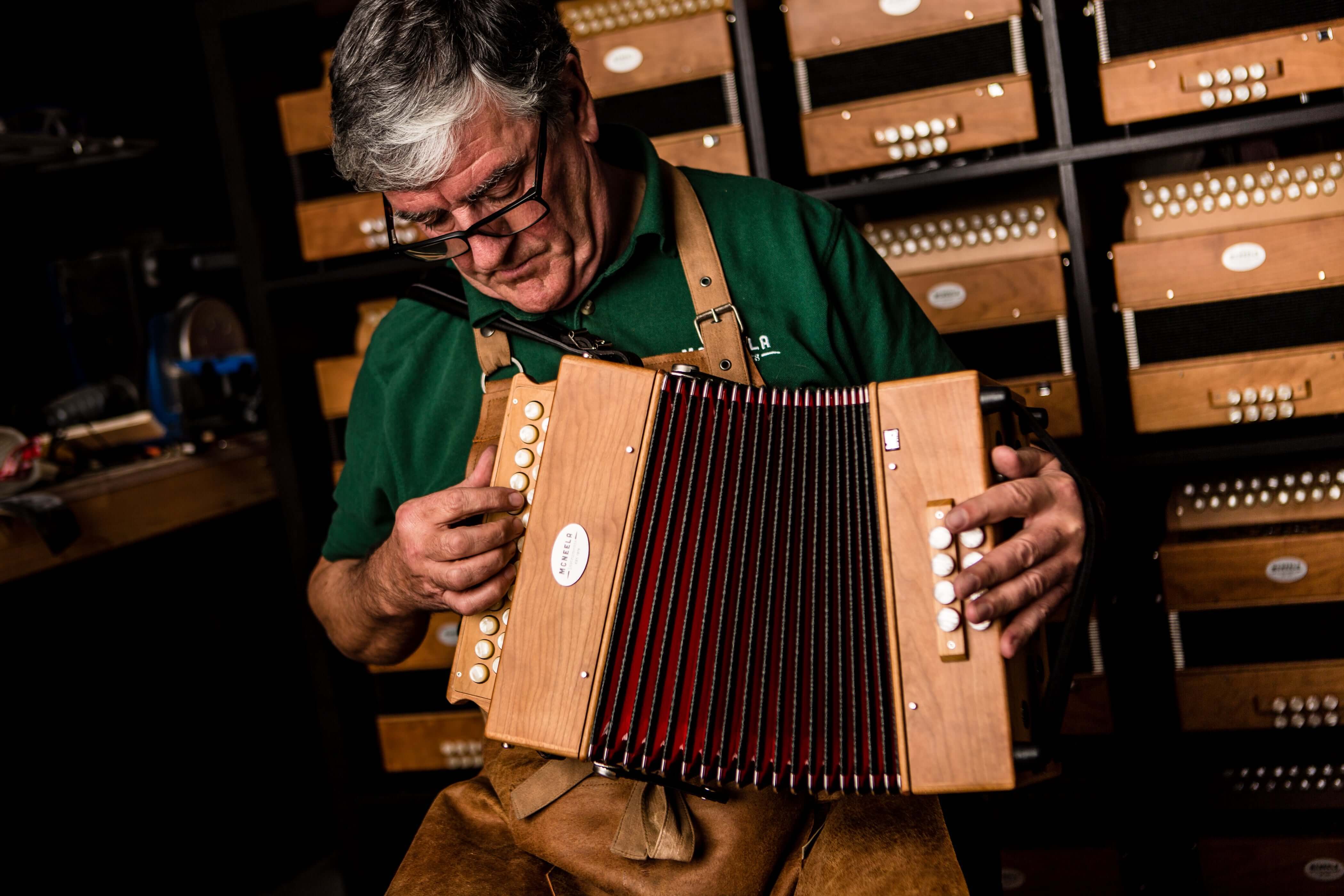
McNeela has been working with accordion players from Dublin since 1979 beginners picking up their first instrument and seasoned professionals looking for something they’ll play for decades. That experience shapes everything: what this collection stocks, how it’s graded, and how we guide players toward the right choice. It also informs the learning programmes McNeela has developed over the years, giving customers a structured path alongside their instrument.
Choosing your first accordion
The most useful question for any new player isn’t “which brand?” it’s “what kind of accordion?” And the answer to that comes almost entirely from the music you want to play.
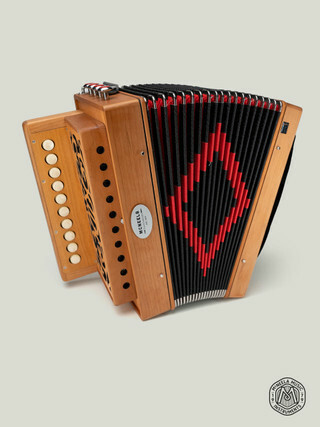
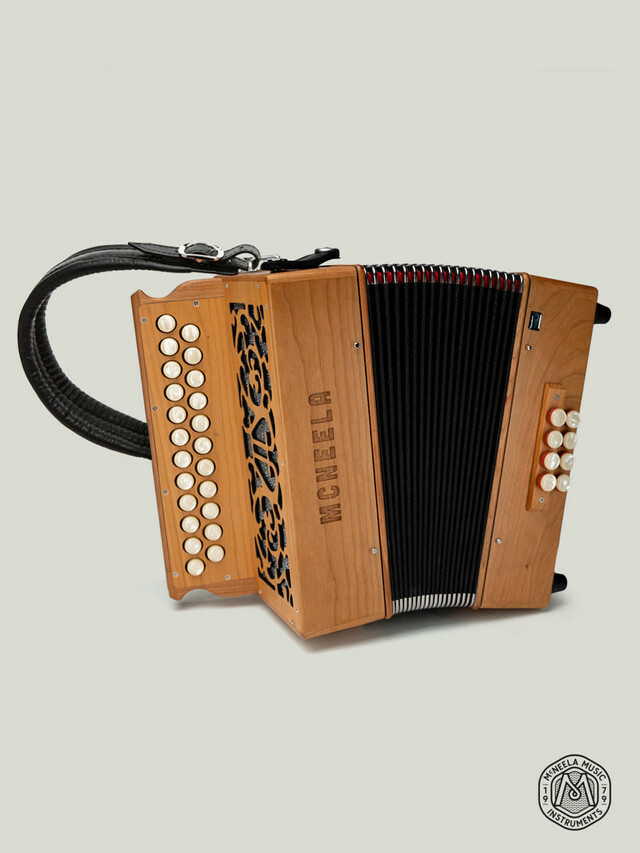
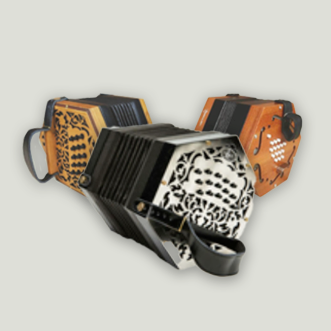
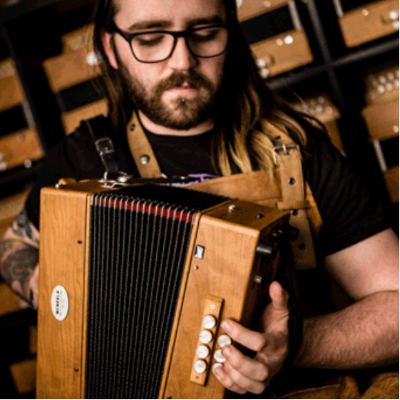
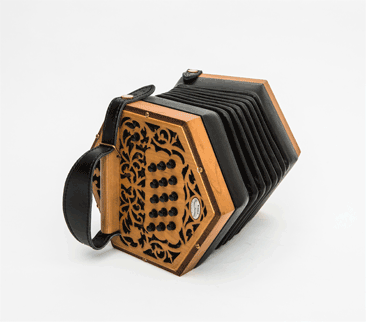
If Irish traditional music is where your heart is, a button accordion is almost certainly the right instrument. The B/C system is the standard among Irish trad players, the instrument you’ll hear at sessions from Doolin to Dublin, and the one McNeela has built much of its reputation around. The C#/D system is the main alternative, with a slightly brighter tonal character that suits some players and tune sets.
If your interests are broader classical, musette, Eastern European folk, or keeping your options genuinely open a piano accordion offers far more versatility. Its keyboard layout is also familiar to anyone with a piano background, which can ease the early stages of learning considerably.
For players who are genuinely undecided, a melodeon is worth serious consideration. These compact, single-row instruments are a natural stepping stone into the button box world, fully at home in Irish traditional music, before committing to a full two-row instrument.
Find Your Fit
| Your situation | Recommended system | Recommended voice |
| First-time buyer drawn to Irish traditional music | 2-voice | |
| Have a piano background or want versatility across genres | Standard keyboard | |
| 1–2 years playing, ready to step up from a first instrument | 2-voice | |
| Regular session player wanting richer, fuller tone | 3-voice (LMM) | |
| Performing professionally, want the finest Irish button accordion | B/C | 4-voice (LMMM) |
Beginner, intermediate & advanced: what the grades actually mean
Grading isn’t a prestige hierarchy, it's a practical matching exercise. The right grade instrument makes learning faster and more enjoyable; the wrong one creates unnecessary friction at the worst possible time.
Beginner accordions are built to be forgiving: lighter in the hands, easier to push and pull, and voiced to produce a reasonable sound without demanding perfect technique from day one. They’re also priced to reflect the reality that a new player’s needs may shift within the first year. McNeela’s beginner range is specifically chosen to avoid the “cheap starter” trap the instrument with stiff action, uneven tuning, and bellows that develop leaks before you’ve learned your first tune. That trap is one of the most common reasons beginners quit early.
Intermediate accordions are where real improvement takes hold. Players who have been at it for a year or two start to feel the ceiling of their entry-level instrument reeds that lose definition at speed, bass buttons that feel imprecise, tone that thins at the edges. Moving into the intermediate range solves those problems and gives the player real room to develop.
Advanced and premium accordions are built to a professional standard. Reed work is hand-finished, voicing is more nuanced, and the instrument responds to the kind of subtle dynamic control that only comes with years of practice. These are instruments bought to be played for decades, not replaced in two.
Piano accordion vs button accordion
Beyond skill level, the choice between piano and button is the single most consequential decision in this category.
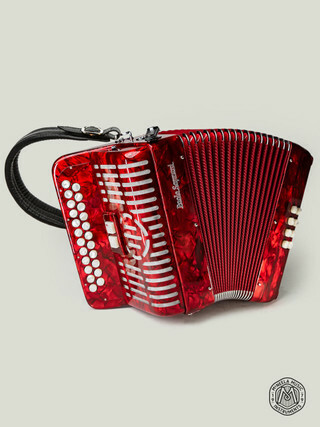
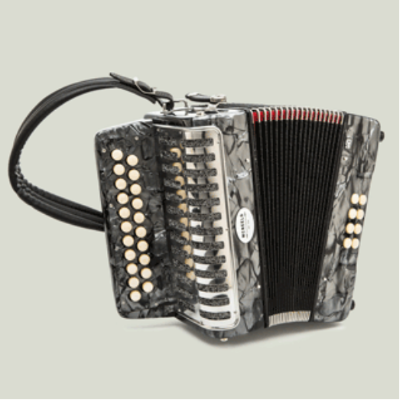
Piano accordions use a standard keyboard on the right hand and a Stradella bass system on the left. They’re widely taught, visually familiar, and available in a broad range of sizes from compact 48-bass instruments for beginners to full 120-bass concert models. Their versatility makes them popular across music education contexts and genres.
Button accordions specifically the two-row B/C and C#/D instruments are the heartbeat of Irish traditional music. They’re lighter than most piano accordions, quicker in the treble, and produce a tone that experienced trad players simply describe as right for the music. The fingering system takes adjustment, but most players who commit to it find the rewards arrive quickly.
| Details | Button Accordion | Piano Accordion |
| Treble side | Rows of Buttons | Piano-style keyboard |
| Best For | Irish traditional music | Classical, folk, broader genres |
| Tuning Systems | B/C, C#/D | Standard chromatic scale |
| Weight | Light | Heavier |
| Familar To | Irish trad players, | Piano players, |
Neither is the wrong choice but they’re not interchangeable. If you know the music you want to play, the table above should confirm your instinct rather than complicate it.
Understanding accordion prices
Accordions span a wider price range than almost any other folk instrument. Understanding what drives the spread protects buyers from two very different mistakes.
Buying too cheap almost always backfires. Very low-priced instruments use reeds that go out of tune quickly, bass mechanisms that stick under pressure, and bellows that develop air leaks before you’ve had the instrument a year. These aren’t minor inconveniences; they make practice frustrating and slow progress at exactly the moment it matters most. McNeela’s range sets a considered floor that reflects what’s actually needed to learn and play effectively.
Buying significantly above your current level is worth thinking through equally carefully. A hand-finished professional instrument deserves to be played by someone who can hear and use the difference, and that usually takes a year or two of solid playing to develop. Across the McNeela range, beginner instruments sit from around $800, professional-grade instruments from $3,400 upward, with intermediate and advanced models covering the ground in between. If you’re unsure which tier suits where you are right now, the team is always happy to help narrow it down.
Completing your setup: accessories & learning
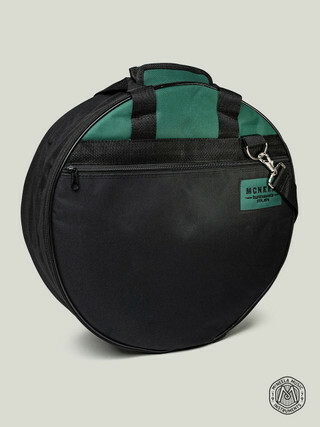
The right accessories do more than protect an instrument; they genuinely improve the playing experience. A well-fitted strap supports posture and frees up bellows movement. A quality gig bag or hard case keeps the accordion safe between sessions. Spare reeds and maintenance items ensure everything performs as it should over the long term.
For players who want a structured path forward, McNeela’s Irish Accordion Masterclass with Benny McCarthy offers expert tuition built specifically around the Irish trad tradition. The programme works across all stages from first scales through to ornamentation and session playing so it grows with the player rather than becoming redundant after a few months.
McNeela’s relationship with its customers doesn’t end at the sale. From choosing the right first instrument to knowing when to step up and finding the right course to support the process, this is a long-term playing partnership not a single transaction.
Frequently Asked Questions
For Irish traditional music, a two-voice B/C button accordion with Czech reeds is the strongest starting point responsive, manageable in weight, and built to support early learning. For broader genres, an entry-level piano accordion is equally well suited. Avoiding stiff action and poor tuning stability is the priority in either case.
Intermediate accordions typically offer a step up in reed quality, tonal richness, and build refinement. They suit players who have outgrown the ceiling of their entry-level instrument and are ready for an accordion that rewards developing technique rather than compensating for a lack of it.
For Irish trad, yes without qualification. The button accordion, specifically the two-row B/C instrument is the standard across sessions and tuition. Its tone, weight, and responsiveness suit the music in a way a piano accordion simply doesn’t replicate. Why would someone choose a piano accordion instead?
A piano accordion suits players with an existing piano background, those interested in classical or continental genres, or anyone who wants the broadest possible harmonic and stylistic range. Its keyboard layout is immediately legible to players already comfortable with piano.
A gig bag or case is worth having from day one, and a well-fitted strap makes a real difference to posture and bellows control. Browse McNeela’s full range of accordion accessories for everything you’re likely to need.
Match the instrument to your current level, not your aspirational one. Beginner instruments are built to support early learning; premium accordions reward the technical control that takes years to build. Buying above your level before you can hear the difference is a poor use of budget at any price point.
Upgrading is a natural part of most players’ journeys. Buying the right instrument for your current level means you’ll get more out of practice now and be better placed to appreciate what a step up offers when the time comes.
A reliable beginner accordion starts from around $800. Below that threshold, quality issues, unstable tuning, stiff buttons, leaky bellows make consistent practice genuinely frustrating.
Yes. McNeela’s accordion range is organised by level, with dedicated collections for beginner, intermediate, advanced, and premium players, making it straightforward to find the right tier without browsing everything.
Yes. Every accordion in this range ships with access to the Benny McCarthy Irish Accordion Masterclass, a structured video programme that covers everything from first notes through to advanced ornamentation, built entirely around the Irish traditional music tradition.
-
-
-
On Sale!
-
-
Sold Out
-
-
On Sale!
-
Sold Out
-
On Sale!
-
Sold Out
-
Sold Out
-
Sold Out
-
Sold Out
-
On Sale!
-
-
Sold Out
-
Sold Out
-
Sold Out




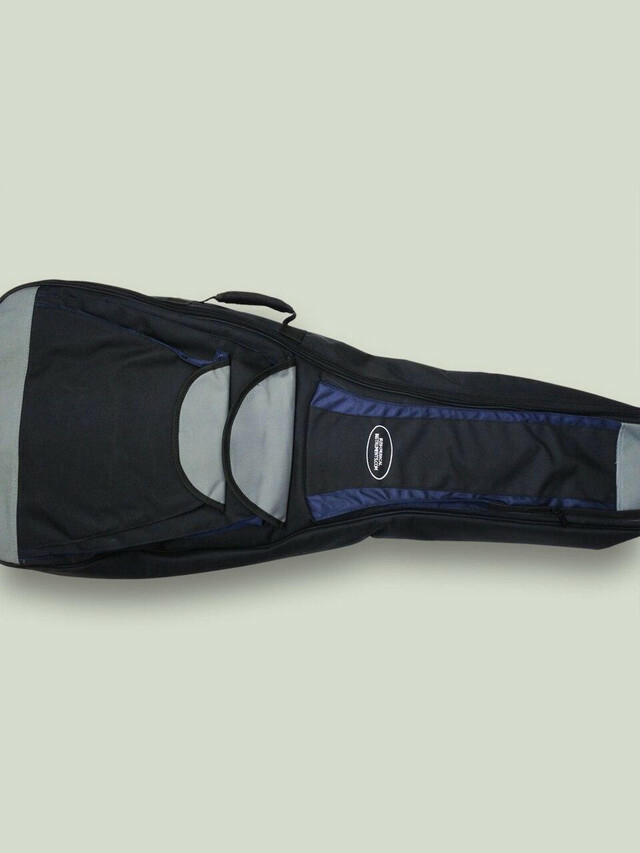
![McNeela Heavy-Duty Accordion Gig Bag [Brand New]](https://cdn11.bigcommerce.com/s-893ij2w/images/stencil/500x659/products/12859/31180/mcneela-heavy-duty-accordion-gig-bag__98612.1736973253.jpg?c=2 "McNeela Heavy-Duty Accordion Gig Bag [Brand New]")


Loading...