
Wild Irish Whistles

MCNEELA WILD IRISH WHISTLES

Category Tag Line

Whistle Precision: Experience McNeela Excellence

view our buyers guide
Concertina banner

Wild Irish Whistles


Loading...

Loading Indicator

learn more

Which Irish tin whistle should I buy?

For most people, a whistle in D. Start with an inexpensive one to find out if you enjoy it, or go straight to a brass, tuneable whistle if you want an instrument you won't outgrow.
Just trying it out

Generation or Clarke in D

€12 – €18
Light, affordable and the whistle generations of Irish players started on. Pitch is fixed and the tone can vary a little from one whistle to the next, which is fine for learning your first tunes.
Shop Generation whistles →
Learning properly or joining sessions

Wild Irish Whistle in D

Around €90 – €130
A brass body gives a brighter, more responsive tone than the aluminium used in most modern whistles. Each one is tuned by hand, and the strong, clear sound carries in a busy pub session.
Shop Wild Irish Whistles →
Adding a second whistle

A low whistle or another key

From €12
A low D for slow airs and a deeper, breathier voice, or a whistle in C, A, B♭ or E♭ to play along with singers and other instruments in different keys.
Shop low whistles →

Tin whistles for every player

Irish tin whistles for every stage, from a €12 first whistle to our hand-tuned brass Wild Irish Whistle. Most players start with a whistle in D, the key most Irish traditional music is played in. Not sure which to get? Our quick guide below the range will help you choose.
Family-run in Dublin since 1979 30-day risk-free returns 80,000+ orders shipped Which whistle should I buy? ↓

Compare our tin whistles

Every whistle below uses the same six-hole fingering, so anything you learn on one carries straight over to another.
Whistle Keys Body Tuneable Best for Price from
McNeela Wild Irish Whistle D, C, A, B♭, E♭ Brass, delrin head Yes Committed learners, session players €119
McNeela Wild Wooden Whistle D African blackwood or rosewood, brass and delrin head Yes A warmer tone, a whistle for life €265
Clarke D, C Tinplate No The traditional, breathy sound €12
Generation D, C, B♭, E♭, F, G Nickel-plated, plastic head No A first whistle, trying other keys cheaply €12
Tony Dixon Low D Low D Some models A first low whistle, slow airs €69
Hand-made in Killarney, a step up for improvers
Prices as listed in October 2026. Sale prices may be lower; see each product for the current price.

D or C: which key should a beginner choose?

**Choose D if you want to play Irish traditional music.** Most jigs, reels and hornpipes are in D and G, and the D whistle plays both comfortably. It's the whistle you'll hear at almost every session. **Choose the key of A, C, Bb, or Eb** if the tunes, books, lessons, or group you're learning with use those keys instead of the Key of D. If you're not sure, most players are better off starting with D, but fingering is the same on every whistle. Only the pitch changes, so nothing you learn is wasted if you switch keys later

Do I need a tuneable whistle?

A tuneable whistle has a sliding head, so you can match your pitch to other players and correct it as the whistle warms up. If you mostly play on your own, a fixed-pitch whistle is fine. If you'll play in sessions or along with recordings, tuneable is worth having.
Shop tuneable whistles →

Tin whistle questions our customers ask

Do I need to learn new fingerings for a whistle in another key?

No. Every six-hole whistle uses the same fingering. Play a tune exactly as you would on a D whistle and it comes out in that whistle's own key, so the same fingers on a C whistle play it a tone lower. That's why players keep whistles in several keys: to match singers and other instruments without learning anything new.

What's the best whistle for a complete beginner on a budget?

A whistle in D. A Generation or Clarke at €12 to €18 is a fine way to find out if you enjoy it. If a cheap whistle sounds squawky however gently you blow, a better-made whistle such as the Wild Irish Whistle is often easier to get a sweet, steady tone from.

What should my second whistle be?

It depends on what you want it for. A low D gives a deeper, mellower voice for slow airs. A C lets you play along with groups and music in C and F. An alto whistle in G or A sits between the two, softer than a high D but easier to hold than a low D. The fingering is the same on all of them.

Does the material change the sound?

Yes, though how you play matters more. Brass is bright, strong and responsive. Aluminium and plastic are light and affordable. Wood, such as blackwood or rosewood, gives a warmer, rounder tone and needs a little more care, including occasional oiling.

How do I know my whistle is in tune?

Play for a minute first, because a cold whistle plays flat. Then check a long note, such as A, against a tuner app or a recording. On a tuneable whistle, slide the head out to lower the pitch or in to raise it. Blowing harder also makes notes sharper, so aim for a steady, relaxed breath.

How do I look after my whistle?

Warm it in your hand before playing. If it clogs mid-tune, cover the window with a finger and blow a short, sharp breath. Afterwards, shake out the moisture and let it dry before it goes back in its bag. Rinse metal whistles in lukewarm, soapy water now and then, and oil wooden whistles occasionally. If a tuning slide gets stiff, clean the joint rather than forcing it.

Chosen in Dublin since 1979

McNeela Music is Irish and family-run. Paraic McNeela made his first instrument in Dublin in 1979, and we still choose every whistle in our range the same way: for how it plays, not just how it looks.

Our own Wild Irish Whistles sit alongside long-established makers like Clarke, Generation, Killarney and Tony Dixon, so you can compare them all in one place and return any whistle within 30 days.

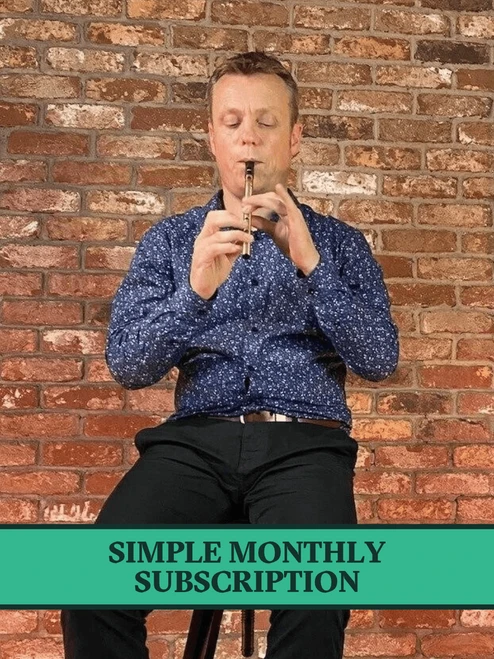
We are thrilled to announce the introduction of the brand new Wild Irish Whistle to our collection of tuneable tin whistles! Featuring a bright, clear tone, and excellent responsiveness, find out why this is the only tin whistle you will ever need. 


!