













_category.original.jpg)



_category.original.jpg)










On Sale!
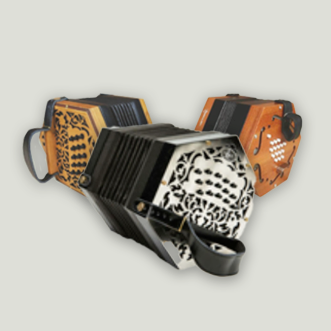
Intermediate Accordions
Intermediate Accordions
learn more
Most players don’t plan to outgrow their first accordion. They simply notice it one day, a tune that demands more than the instrument can give. Reeds smear when you push tempo. Bass buttons feel vague under confident fingers. You reach for a soft passage and the sound thins rather than responds. The instrument isn’t failing. You’ve simply outgrown it.
That’s the moment this collection is built for. Not an emergency, not impatience, a sign of genuine progress. The intermediate accordion exists to remove the ceiling your beginner instrument has placed on your playing, without the price tag of a professional instrument you may not need yet.
This range also serves another group of players who often get overlooked: adults returning to the accordion after years away. If you played as a child and are picking it back up, or if life got in the way and you’re restarting with renewed purpose, you belong here, not on the beginner page. The instruments below are built to match where serious players are and to grow with them from there. We’ll cover what intermediate means technically, what it costs, what’s included, and where the journey goes next.
What separates an intermediate accordion from a beginner
The differences between a beginner and intermediate accordion are not about aesthetics or brand. They are differences a developing player can hear, feel, and measure in every practice session.
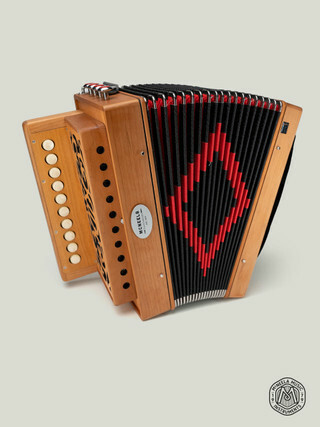
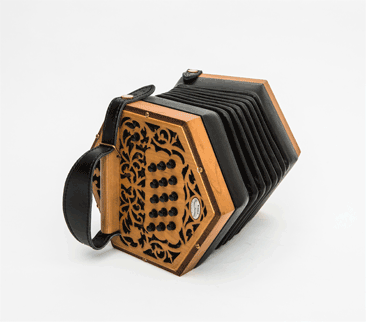
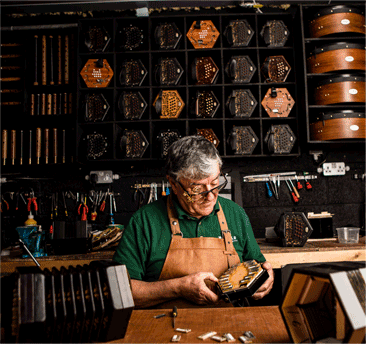
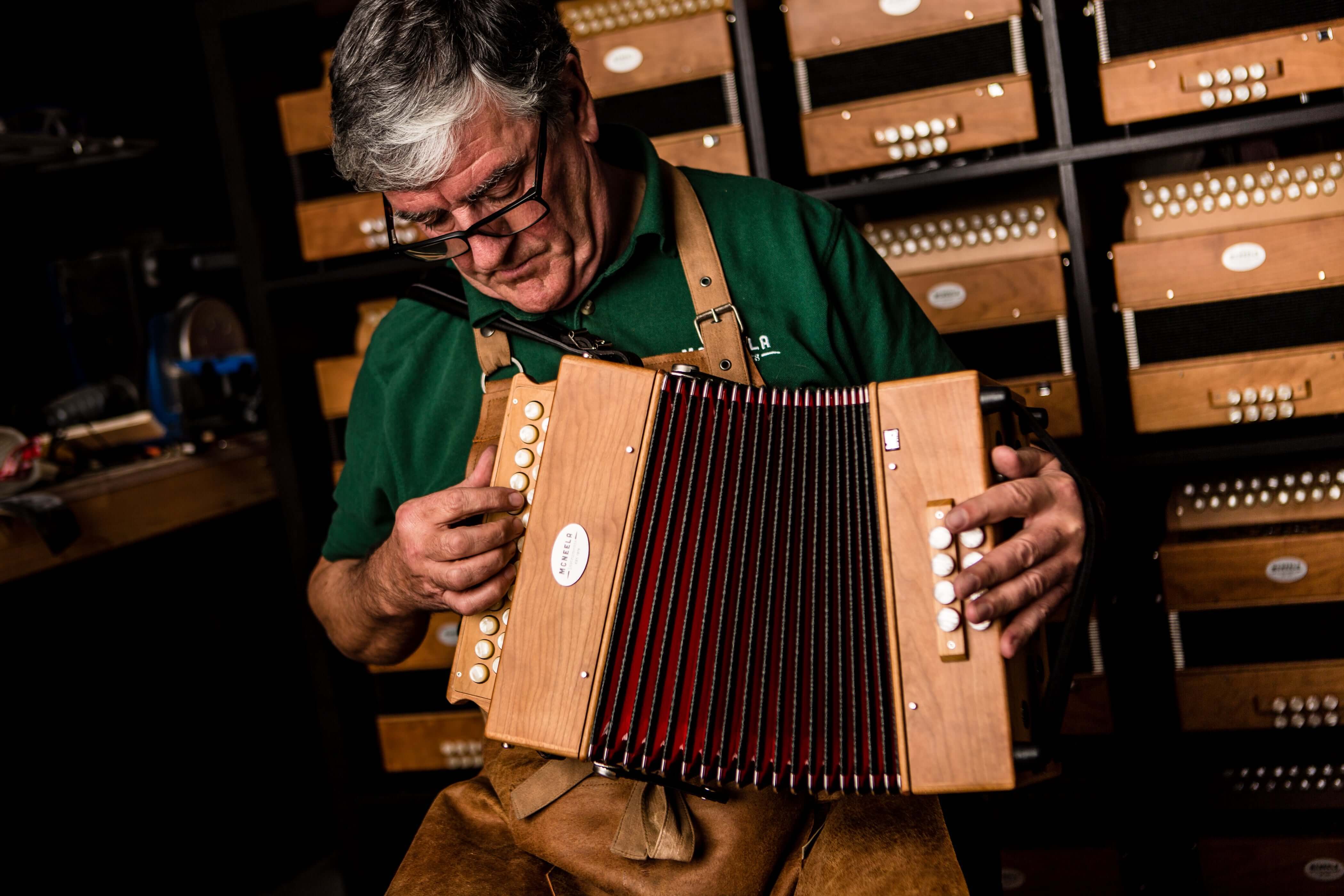
The most significant upgrade is in the reeds. McNeela’s intermediate range uses Czech Tipo a Mano reeds hand-finished by a craftsperson to ensure precise tuning, clean response at speed, and intonation stability that holds up over years of playing. Standard beginner reeds drift under pressure and blur when you push tempo. Hand-finished reeds track your fingering with clarity, rewarding improving technique rather than exposing its limits.
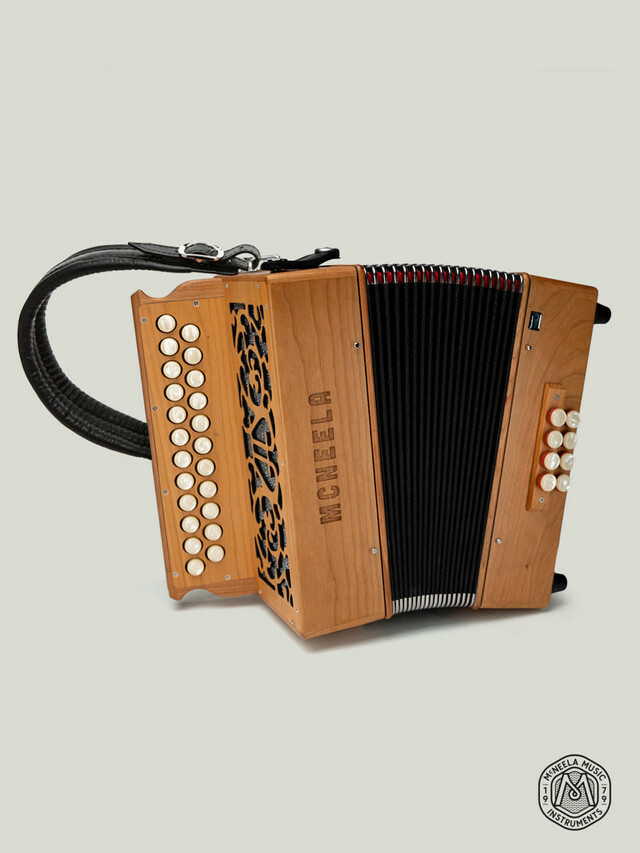
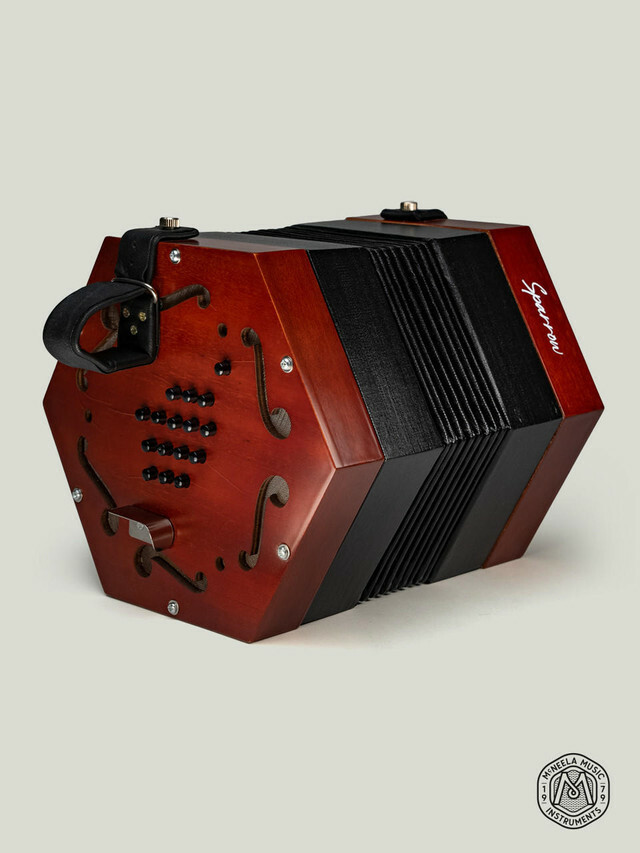
Construction steps up in equal measure. McNeela’s intermediate instruments are built on an American cherrywood frame rather than polymer, producing a warmer, more resonant tone with natural projection. The bellows are tighter and more responsive, giving finer dynamic control at both ends of the volume range. The button action is faster, with shorter travel that suits quicker fingering. And the bass layout follows the Paolo Soprani pattern, the standard among serious Irish trad players.
Perhaps the most important distinction is longevity. Intermediate accordions improve with age, reeds break in and develop richness, bellows gain character and responsiveness. Beginner instruments plateau quickly. This is the single biggest quality leap per dollar in the entire accordion journey.
Choosing your system and voice at the intermediate level
The intermediate level is often the point where players revisit choices they made without much thought as beginners. On tuning, most will stay where they are: B/C remains the standard for Irish traditional music, the system most tuition and session playing is built around, and the natural choice for anyone who wants to play alongside others without friction. C#/D has grown steadily in popularity and offers a slightly brighter tonal character that suits certain players and tune sets. McNeela offers intermediate instruments in both systems.
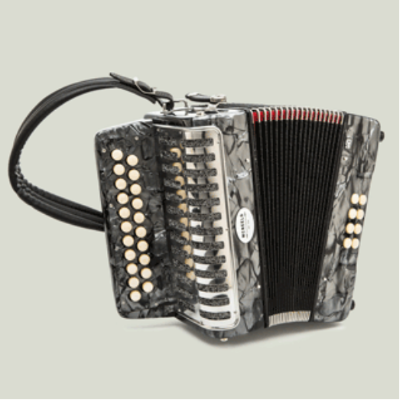
On voice configuration, the choice at this level is between 2-voice and 3-voice. A 2-voice accordion is lighter, brighter, and exceptionally responsive, the natural choice for session playing, for players who value portability, and for those still developing their technique. This is the territory of McNeela’s most popular accordion, and the reason it’s the bestseller is straightforward: it delivers professional-quality sound at the most accessible price in the intermediate range. For a deeper look at how the button accordion family works at each level, the dedicated page covers the full picture.
A 3-voice LMM instrument adds a low reed to produce warmer harmonic depth, bridging into advanced territory. It suits players who want a fuller, richer sound and are willing to carry the modest additional weight. The choice between 21 and 23 buttons also becomes more relevant at this level as repertoire expands, the extra range a 23-button instrument offers starts to feel worthwhile. Players whose interests extend beyond Irish trad should also consider McNeela’s piano accordion range for broader genre coverage.
Find Your Fit
| Your situation | Recommended system | Recommended voice |
| 1–2 years in, staying on B/C, want to raise the quality floor | 2-voice | |
| Ready to upgrade, prefer the brighter C#/D character | C#/D, 21 or 23 button | 2-voice |
| Returning after a break, want quality without a professional price | 2-voice | |
| 2+ years playing, want richer tone for sessions and performances | 3-voice (LMM) | |
| Serious player wanting the fullest intermediate sound available | 3-voice (LMM) |
How much should an intermediate accordion cost
McNeela’s intermediate range runs from approximately $950 to $1,800. The sweet spot and the brand’s most popular instrument sits at around $1,200: a cherrywood-framed 2-voice button accordion with Czech Tipo a Mano reeds and a Paolo Soprani bass layout. There is a reason it consistently outsells everything else in the range. It is the point at which quality, playability, and price align most cleanly.
The quality jump from beginner to intermediate is more audible than any other upgrade in the accordion journey. Hand-finished reeds, cherrywood construction, refined bellows these are improvements a player can hear immediately, not after years of practice. The step from intermediate to advanced, by comparison, requires a more developed ear and more advanced technique to fully appreciate. This is the tier where the money works hardest.
Every intermediate accordion ships with a quality gig bag and instant access to the Benny McCarthy Irish Accordion Masterclass, including intermediate-level courses. Instruments at this tier also hold their value far better than entry-level models, and they improve with playing both worth factoring into any comparison.
What comes with your intermediate accordion
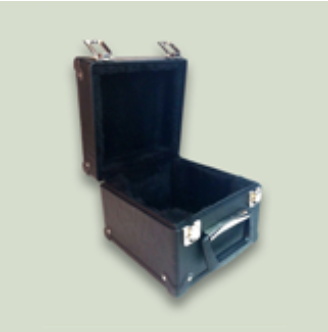
Every McNeela intermediate accordion ships with a fitted gig bag and instant access to the Benny McCarthy Masterclass intermediate-level modules included, covering technique, ornamentation, and session repertoire beyond beginner material. Premium 3-voice models come with a hard case for more robust protection. A full range of accordion accessories, straps, maintenance items, spare reeds is available separately.
All new instruments carry a one-year guarantee against material defects, with servicing available beyond the first year for a nominal fee. McNeela offers a 30-day try-at-home policy on all instruments particularly reassuring at this price point. Shipping runs next day within Ireland, three to five days to the UK, and around seven days to Europe, the USA, Canada, and the rest of the world. Players in Dublin are welcome to visit the showroom at Baldoyle Industrial Estate to compare models in person before deciding, especially valuable when choosing between voice configurations.
Growing beyond intermediate: the path ahead
An intermediate accordion is not a stepping stone to hurry past. It’s an instrument that should serve a committed player for years through sessions, performances, and the kind of playing that comes with sustained practice. The reeds will develop richer character as they break in. The bellows will respond more naturally. Over time, the instrument becomes less something you operate and more something you play through.
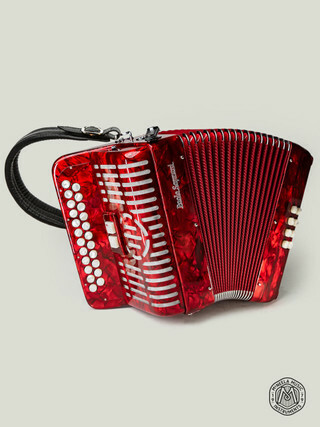
When the upgrade moment eventually arrives, McNeela’s advanced and premium accordion ranges pick up where this collection leaves off 3-voice instruments with Czech Tipo a Mano reeds in the Premium range, and the Paolo Soprani Jubilee IV for players who want the finest instrument in the Irish button accordion tradition. That path is already built in from the start.
For players still working through the early stages, McNeela’s beginner range remains the right starting point; no benefit comes from upgrading before the music demands it. But when it does demand it, this is the collection that answers. The intermediate step is where a learner becomes a player.
Frequently Asked Questions
When you can consistently hear the limitations of your current instrument: reeds that blur at speed, dynamics that refuse to soften, bellows that feel sluggish under expressive playing. Most players reach this point after one to two years of regular practice. If your technique has clearly outgrown the instrument, you’re ready.
The key differences are reed quality (hand-finished Tipo a Mano vs standard), construction material (cherrywood frame vs polymer), bellows response, and action speed. Intermediate instruments respond to technique that beginner models physically cannot express, and they improve with age rather than plateauing.
It bridges both. The Original is designed for players progressing from beginner to intermediate and beyond. Its Czech Tipo a Mano reeds, cherrywood frame, and Paolo Soprani bass layout place it firmly in intermediate territory, but beginners who want quality from day one regularly choose it as their first instrument.
Not necessarily. B/C is the standard for Irish traditional music and the safer choice for most players upgrading within the tradition. C#/D offers a slightly brighter tonal character and is growing in popularity. Most players stay with their original system unless they have a specific reason to switch. Both are available across McNeela’s intermediate range.
McNeela’s intermediate range runs from approximately $950 to $1,800. The most popular instrument sits around $1,200 a 2-voice cherrywood accordion with hand-finished reeds. Every instrument ships with a gig bag and Benny McCarthy Masterclass access, which adds meaningful value to the base price.
A 2-voice accordion is lighter and brighter, ideal for session playing and players still building technique. A 3-voice adds a low reed for richer harmonic depth and warmth, bridging into the advanced tier. The choice comes down to tonal preference and whether you prioritise portability and clarity or fullness of sound.
Years, comfortably. Hand-finished reeds break in and develop a richer tone with playing. Bellows gain character and responsiveness over time. A well-maintained intermediate accordion will serve most players through several years of serious practice and regular session playing before the next upgrade makes sense.
Yes. Returning players often find intermediate instruments far more rewarding than restarting on a beginner model. If you had basic technique before your break, muscle memory returns faster than you’d expect and a quality instrument makes the return significantly more enjoyable and motivating.
-
-
-
-
Sold Out
-
-
On Sale!
-
Sold Out
-
Sold Out




Loading...