












_category.original.jpg)



_category.original.jpg)







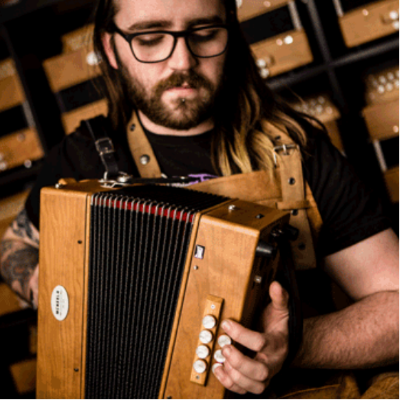
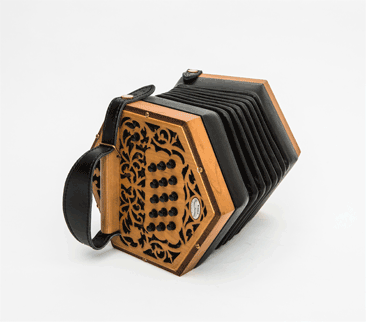


On Sale!
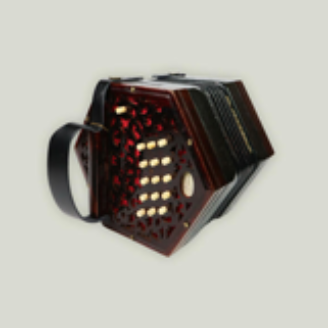
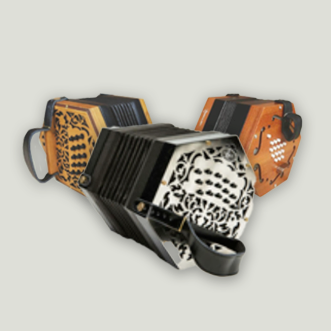
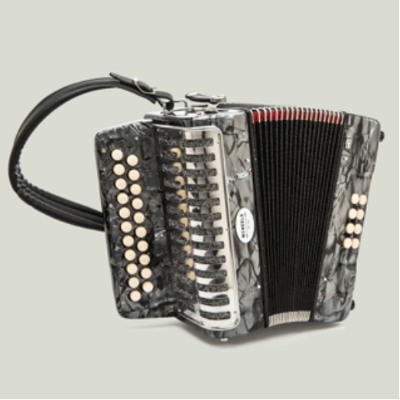
B/C Button Accordions
B/C Button Accordions
learn more
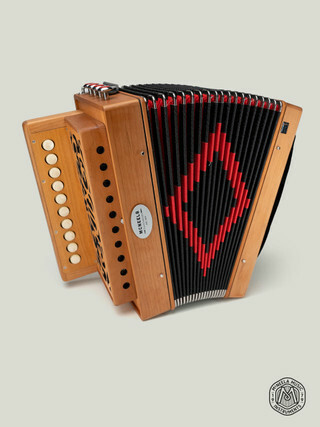
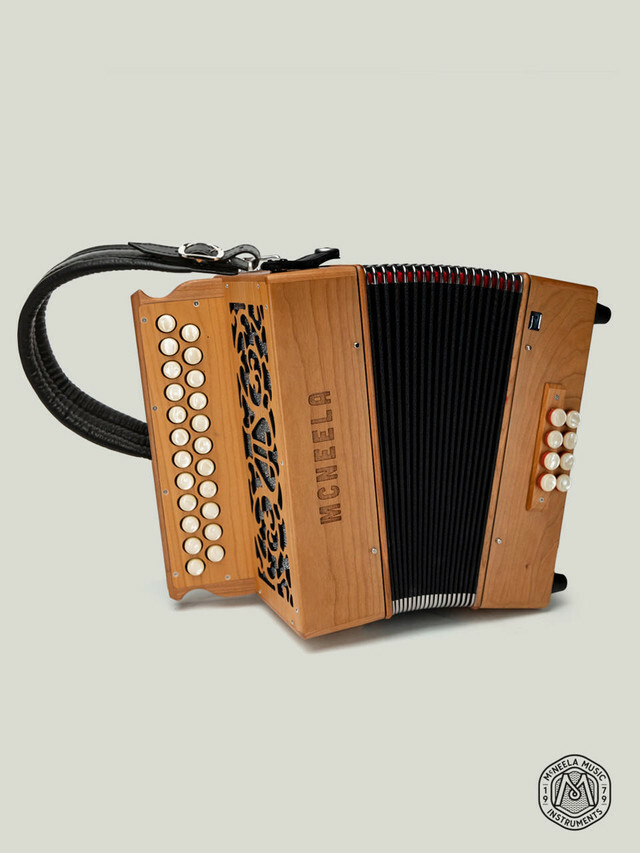
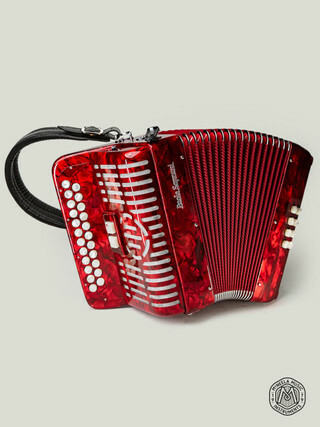
Every button accordion in this collection is a two row diatonic box built for Irish traditional music, so the choice comes down to four things. Settle them in order and you will land on the right Irish instrument.
- Tuning: B/C or C#/D
- Buttons: 21 or 23
- Voices: 2, 3 or 4
- Level: beginner through to professional
If you are buying your first box, start with tuning and level. The rest follows from there. The sections below take each decision in turn, and the Find Your Fit table further down matches a setup to your experience level.
How a button accordion works
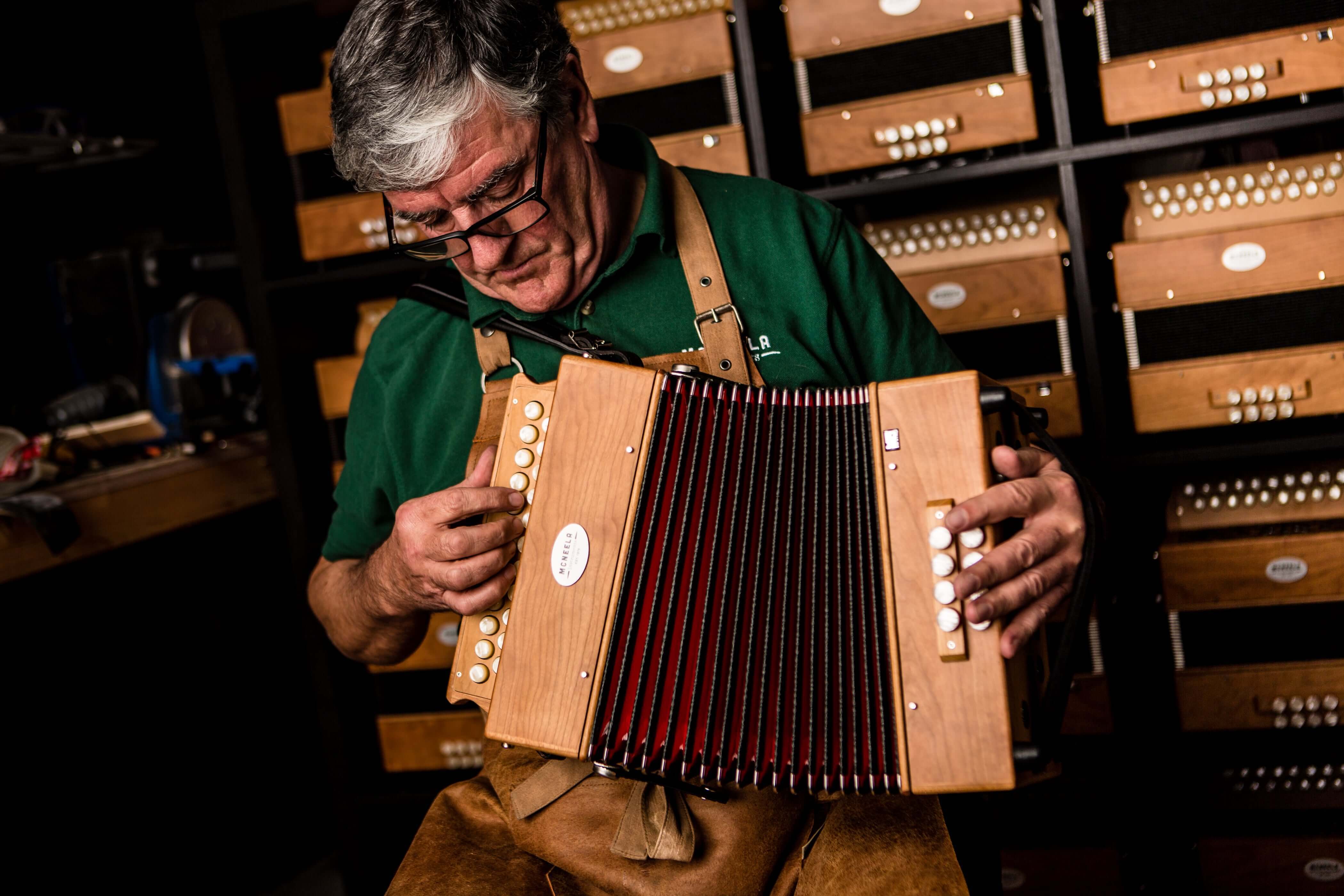
A button accordion makes its sound from air, not strings or hammers. You work the bellows with your left arm, pushing and pulling to drive air across metal reeds, while your hands do two separate jobs.
- Treble side (right hand): the rows of buttons that carry the melody.
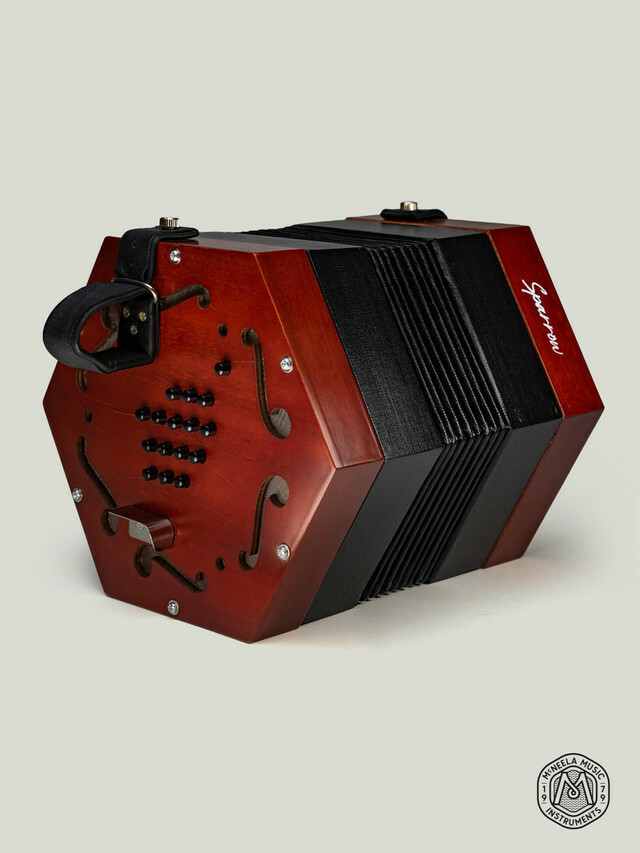
- Bass side (left hand): eight bass buttons that supply the chords and bass notes behind the tune.
- Bellows: the lungs of the instrument, shaping volume, rhythm and expression.
For a full tour of the reeds, valves and inner workings, see how a button accordion is built.
The Irish box is bisonoric, which means each button sounds a different note depending on whether you push or pull the bellows, much like a harmonica. That push and pull is what gives trad playing its lift and drive. To get started on the instrument itself, see our guide on how to learn to play the button accordion.
Diatonic vs chromatic button accordions
This is the first label people get tangled in, and it is simpler than it sounds.
A diatonic button accordion is bisonoric: each button gives one note on the push and a different note on the pull. The Irish two row box is diatonic, but because the two rows are tuned a semitone apart, every note of the chromatic scale is within reach across the combined layout. In practice it plays as a fully chromatic instrument.
A chromatic button accordion is a different family altogether. It is unisonoric, so each button sounds the same note on the push and the pull, and it is built for continental classical, jazz and European folk.
Every box in this collection is a diatonic two row instrument made for Irish music. If your interest runs to classical or continental styles, the piano accordion range is a better fit.
| Diatonic button accordion | Chromatic button accordion | |
| Note on push vs pull | Different note each way (bisonoric) | Same note each way (unisonoric) |
| Tuning | Two rows a semitone apart (B/C or C#/D)
| Buttons in semitones, three to five rows
|
| Built for | Irish trad and folk | Classical, jazz, continental folk |
| In this collection | Yes, the full range | No, see piano accordions |
B/C or C#/D: choosing your tuning
Both tunings are right for Irish traditional music. The difference is in how the instrument feels under your hands, not in what it can play, so the choice is personal.
On a B/C button accordion the outer row is tuned to B and the inner row to C. It has a smooth, flowing sound, asks for more finger movement and less bellows work, and it is the system most teachers use and most sessions expect. For a first box, it is the safe and standard choice.
On a C#/D button accordion the outer row is C# and the inner row is D. It has a brighter, more cutting tone, asks for more bellows and less finger movement, and it sits at the heart of the Sliabh Luachra style and lively polka playing. It has been growing in popularity for years.
If your teacher plays one or the other, follow them. If you are starting cold, B/C is the more travelled road. For a fuller breakdown, read our guide to B/C or C#/D tuning.
| Voices | Reed layout | Level | Tone |
| 2 voice | MM | Beginner | Bright, clear |
| 3 voice | LMM or MMM | Intermediate to advanced | Rich, full, more projection |
| 4 voice | LMMM | Professional | Concert grade volume |
| B/C | C#/D | |
| Tone | Smooth and flowing | Bright and cutting |
| Movement | More fingers, less bellows | More bellows, less fingers |
| Best known for | Most teaching and most sessions | Sliabh Luachra style, polkas |
| Who should pick it | Most beginners, the standard start | Players drawn to its brighter lift |
21 or 23 button accordions?
Every box here has two rows of treble buttons and eight bass buttons. The only question is whether you want 21 or 23 treble buttons.
A 21 button accordion covers every note you need for traditional playing. It is lighter, simpler to find your way around, and the standard starting point for beginners.
A 23 button accordion adds two more treble buttons at the top end, which widens your range and your repertoire. It suits players who are progressing quickly, or who already know they will want the extra room.
Three row and 30 button boxes exist, but they sit outside the Irish trad mainstream. If even two rows feels like a lot at the start, a single row melodeon is a gentler way into the same family.
| 21 button | 23 button | |
| Weight | Lighter | Slightly heavier |
| Range | All essential trad notes | Two extra treble buttons, wider range |
| Best for | Beginners | Players progressing or wanting room to grow |
What 'voices' mean, and why they change the price
A voice is a reed that sounds when you press a button. The number of voices is the single biggest reason one box costs more than another; it changes the depth and volume of the sound.
A two voice box sounds two reeds per button for a bright, clear tone. It is light and forgiving, which is exactly what a beginner wants.
A three voice MMM box sounds three reeds per button. The tone is richer and fuller, with more depth and projection, which is why it suits intermediate and advanced players stepping up.
A four voice LMMM box, such as the Paolo Soprani Jubilee IV, sounds four reeds per button for concert grade volume and presence. This is professional territory.
McNeela boxes are built with hand selected Czech reeds. Paolo Soprani instruments use Italian Voci Armoniche Tipo a Mano reeds, hand finished for the finest response.
Find your fit: choose by level
The jump between tiers is not about looks. It is about reeds, voicing and construction, and it matters more the further your playing goes.
Beginner: McNeela's two voice boxes use Czech reeds for a clear, stable tone. They are lighter and more forgiving on the bellows, built to help early learning rather than fight it. Browse our beginner accordions.
Intermediate and advanced: Three voice MMM boxes bring richer tone and more projection, with a Paolo Soprani bass layout and Czech reeds. See the intermediate and advanced accordions.
Professional: The Paolo Soprani Jubilee III and Jubilee IV, Italian made with hand finished reeds. The four voice LMMM Jubilee IV is widely held to be the benchmark for Irish button accordion sound. Browse the premium range.
How much does a button accordion cost?
| Your situation | Recommended system | Recommended voice |
| New player, want the Irish trad standard | B/C, 21 button | 2 voice |
| New player drawn to a brighter, cutting tone | C#/D, 21 button | 2 voice |
| One to two years in, repertoire growing | B/C, 23 button | 2 voice |
| Developing player wanting warmth and depth | B/C or C#/D, 23 button | 3 voice (LMM or MMM) |
| Professional, want concert volume | B/C, 23 button | 4 voice (LMMM) |
A good button accordion is an investment, and the spread is wide. Buying too cheap is a false economy: budget boxes drift out of tune, the bass can stick, and the bellows start to leak air before you have learned your first set.
Across the McNeela range, here is roughly what to expect.
| Tier | Voices | Indicative price (EUR) |
| Beginner | 2 voice | from ~€849 |
| Intermediate / Advanced | 3 voice | ~€1,435 to €1,595 |
| Professional | 4 voice | ~€2,986 to €3,486 |
The reason for the price spread is simple. As you go up, you are paying for better reeds, more voices and more hand finishing, all of which you can hear and feel as your playing develops.
Button Accordions Reviewed and played by Benny McCarthy
There is no better way to judge a box than to hear an expert play it. In the reviews below, Benny McCarthy, button accordion player with Danú, takes each McNeela model in hand, so you can hear his verdict and the sound of the instrument before you decide. He runs from the beginner two voice boxes through the three voice models for intermediate and advanced players, and up to the Paolo Soprani range at the top.
Benny also teaches the masterclass included with every box, and reviews the single row melodeon, if you are after a gentler start. To see the full range, browse all of our accordions.
| Video | Watch |
| Benny McCarthy reviews the McNeela Red and Grey Button Accordions | |
| Benny McCarthy reviews the McNeela 3 Voice Premium Button Accordion in B/C | |
| The McNeela 3 Voice MMM Grey Accordion in B/C, reviewed by Benny McCarthy | |
| Review of the McNeela 3 Voice MMM Wooden Accordion in C#/D by Benny McCarthy |
Why buy your button accordion from McNeela
A button accordion has to earn its place in a session, so build quality is not a detail. Here is what stands behind every box in this collection.
- Made and curated in Dublin since 1979, with over forty years of instrument making behind the McNeela name.
- Built with hand selected Czech reeds, a Paolo Soprani bass layout and an American cherrywood frame, with hand finishing on the higher tiers.
- Backed by thousands of five star reviews and a support team that answers quickly, before and after you buy.
- Endorsed and played by Benny McCarthy of Danú, who also teaches the masterclass included with every instrument.
If you would rather play before you decide, the Baldoyle Industrial Estate showroom in Dublin is open to visitors. You can also read our customer reviews.
Shipping, try at home and after sales
Every button accordion ships with a protective case or gig bag and full access to the Benny McCarthy Irish Accordion Masterclass, a structured video course from one of Ireland's most respected players.
Try it at home for 30 days. If the box is not right for you, send it back. Every new instrument carries a one year guarantee against material defects, with servicing available after that for a small fee.
We ship worldwide: next day within Ireland, three to five days to the UK, and around seven days to the rest of the world.
Frequently Asked Questions
Button box is the everyday name for a button accordion, the squeezebox you hear in Irish traditional music. It has rows of buttons on the treble side instead of piano keys, eight bass buttons on the other side, and bellows in the middle that drive air across the reeds.
The Irish button accordion is diatonic, meaning each button sounds a different note on the push and the pull. Because the two rows are tuned a semitone apart, you can still reach every note of the chromatic scale, so it plays as a fully chromatic instrument in practice.
A button accordion has rows of round buttons on the treble side, each able to sound two notes depending on bellows direction. A piano accordion has piano style keys, each sounding one note. Button boxes are lighter and quicker, and they are the standard for Irish traditional music.
Neither is simply easier; it depends on your background. If you already play piano, the piano accordion keyboard will feel familiar. If you are starting fresh for Irish music, the button accordion is lighter, more compact, and the instrument almost every trad teacher and session uses.
It is one of the more approachable trad instruments to start learning. Getting a tune going comes quickly, while mastery, as with any instrument, takes time. The masterclass included with every box takes you from your first notes through to session playing. See our guide on how to learn the button accordion in three steps.
B/C describes the tuning of the two treble rows: the outer row is tuned to B, the inner row to C. It is the most widely played system in Irish traditional music and the one most teachers use. The main alternative is C#/D, which has a brighter tone.
A standard Irish button accordion has either 21 or 23 treble buttons in two rows, plus eight bass buttons. The 21 button covers everything needed for traditional playing. The 23 button adds two treble buttons for extra range.
Voices are the number of reeds that sound when you press one button. A two voice box sounds two reeds for a bright, clear tone. A three voice box sounds three for a richer, fuller sound. A four voice box sounds four for concert grade volume.
A melodeon is a single row button accordion, with one row of melody buttons. Button accordion is the wider term that also covers the two row B/C and C#/D boxes used in Irish music. The two row layout lets you cross rows and play in more keys. Browse our melodeons.
A quality button accordion starts at a few hundred euro and runs into the thousands. McNeela's two voice beginner boxes start around €849, three voice boxes sit around €1,435 to €1,595, and professional Paolo Soprani instruments begin near €2,986.
You can, though tuning matters. The B/C and C#/D boxes in this collection are set up for Irish traditional music. Styles such as Tex-Mex, Norteño and French musette are usually played on differently tuned diatonic boxes, so an Irish box is best kept for trad and related folk.
For most players starting out, a B/C, 21 button, two voice box is the standard and the safest first choice. As you progress, a three voice box adds depth, and a four voice Paolo Soprani Jubilee IV is the benchmark for concert grade Irish sound. See our pick of the best button accordions for Irish music.
Our range is new instruments only, each covered by a guarantee and a 30 day try at home policy. If you are weighing up a vintage box, our guide to vintage Paolo Soprani accordions is a good place to start.
Melodeon and accessories nudge
Still deciding? A single row melodeon is a gentler start in the same family. And whichever box you choose, a good strap and a hard case are worth adding from day one.
-
-
-
-
-
-
Sold Out
-
-
-
On Sale!
-
Sold Out
-
Sold Out
-
Sold Out
-
Sold Out


Loading...