













_category.original.jpg)



_category.original.jpg)









On Sale!
Button Accordions
Button Accordions
learn more
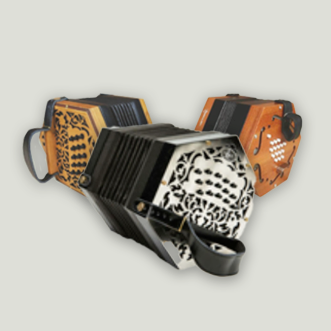
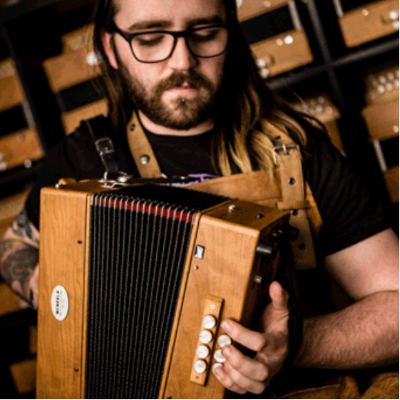
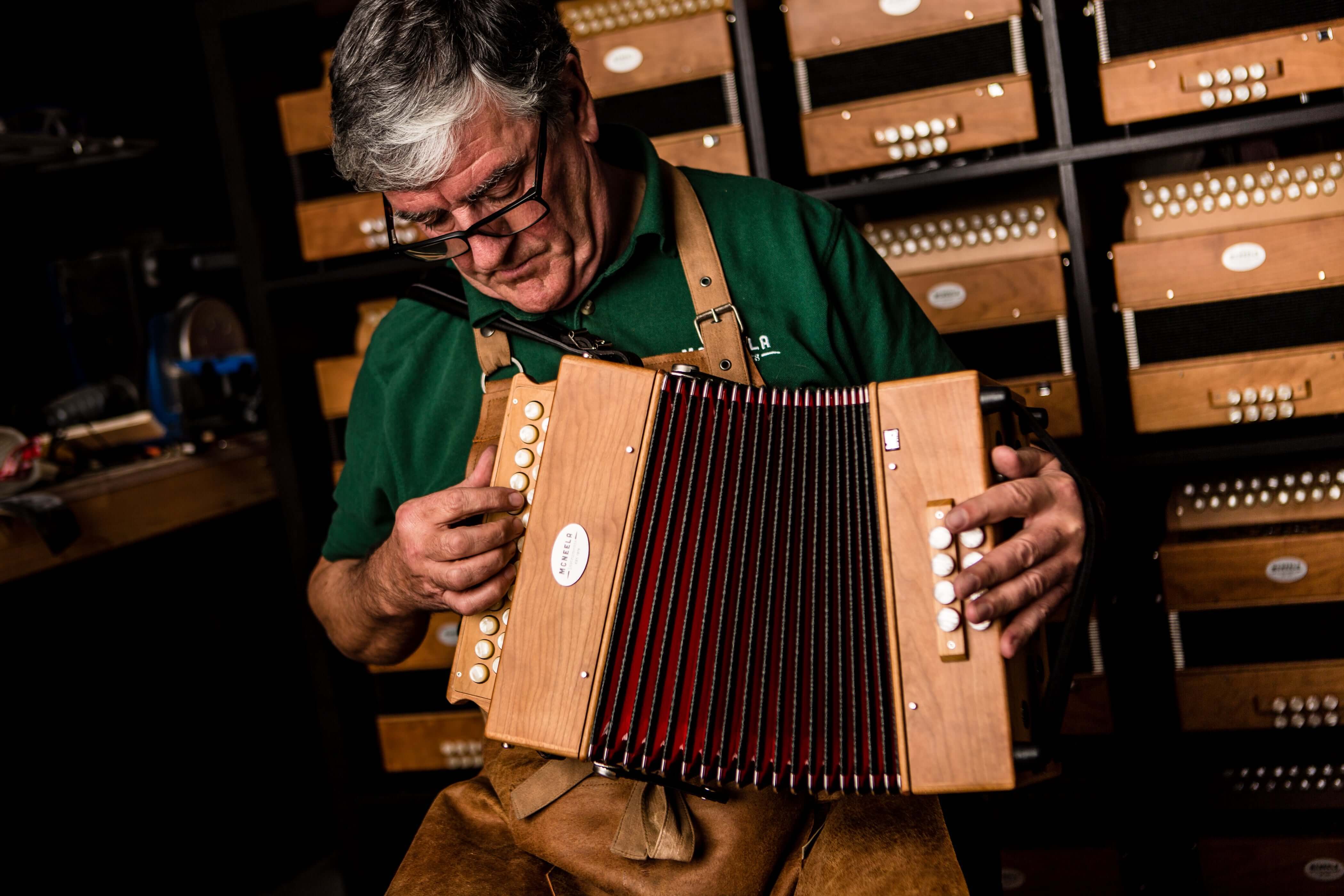
In Irish traditional music, the button accordion or the “box,” as most players call it, holds a place no other instrument quite fills. It’s the sound driving a session in a Clare pub, carrying across a concert hall, and running through the hands of every generation of Irish musicians who built their playing around it. You’ll hear it called a button box, a box accordion, a squeeze box, different names, same instrument.
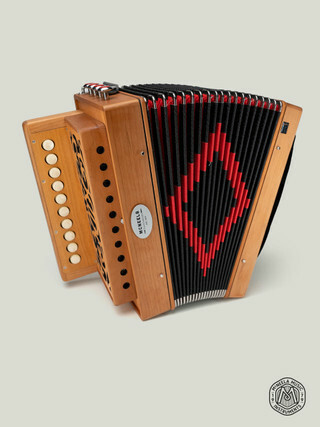
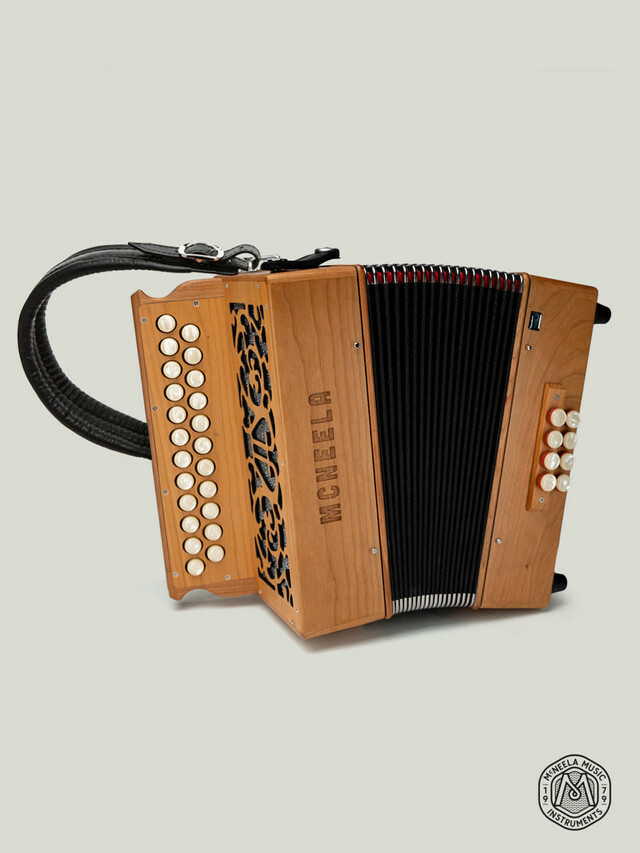
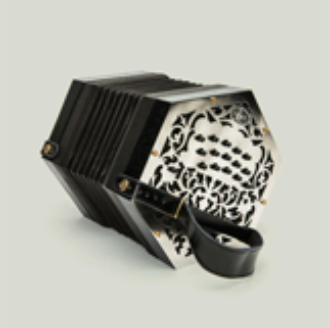
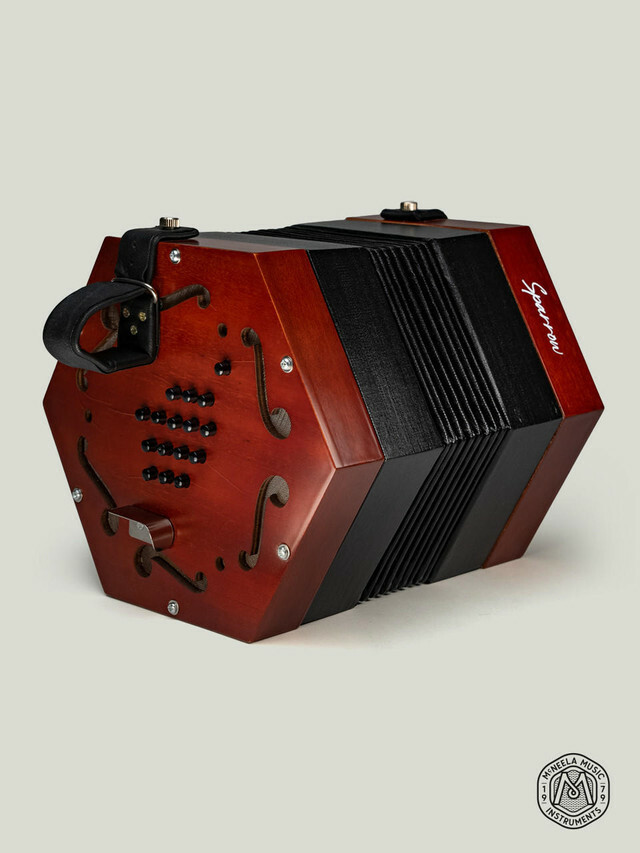
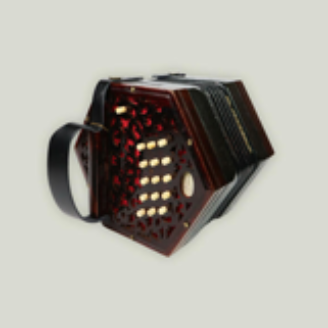
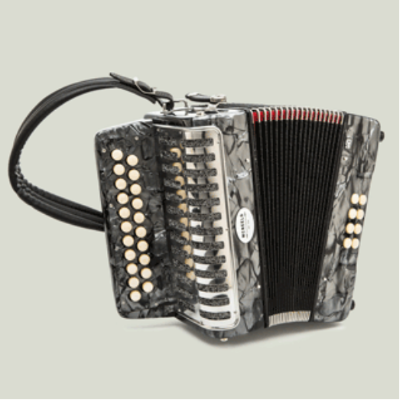
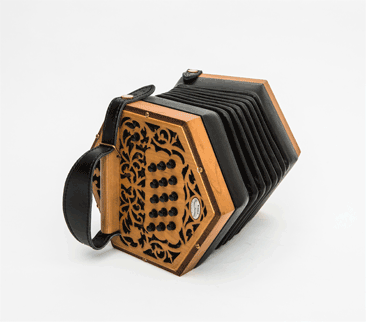
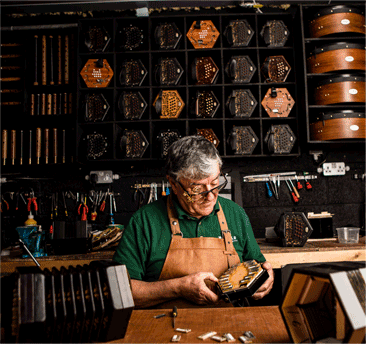
A button accordion uses rows of buttons on the treble side rather than piano-style keys, producing a compact, responsive instrument with a punchy, rhythmic tone. McNeela has been building and curating button accordions from Dublin since 1979, and this collection covers the full span of the journey from entry-level instruments for first-time players right through to professional-grade Paolo Soprani accordions played on stages worldwide. Read on for a breakdown of types, tuning systems, and how to choose by level.
Diatonic vs chromatic button accordions
One of the first questions that comes up when researching button accordions is the diatonic vs chromatic distinction. It’s simpler than it sounds, but it’s worth understanding clearly.
A diatonic button accordion is bisonoric; each button produces a different note depending on whether the bellows are being pushed or pulled. The Irish two-row button accordion is diatonic in this sense. However, because the two rows are tuned a semitone apart, every note of the chromatic scale is accessible across the combined layout. In practical terms, the instrument is functionally chromatic despite its diatonic classification.
When musicians refer to a “chromatic accordion,” they typically mean something different entirely: a continental instrument used in classical, jazz, and European folk music, where each button sounds the same note in both bellows directions. These are a distinct family. McNeela’s button accordion range is built for Irish traditional music and centres on the diatonic two-row format. Players whose interests extend further into classical or continental styles will find a better fit in the piano accordion range.
Rows, buttons, and tuning systems explained
The standard Irish button accordion has two rows of treble buttons either 21 or 23 and eight bass buttons. This two-row layout is the foundation of Irish trad playing and the format every instrument in this collection follows.
Each row is tuned to a specific key. The most widely played system is B/C: the outer row is tuned to B, the inner row to C. It’s the default configuration for most Irish trad tuition and session playing, and the safest starting point for anyone entering the tradition. The C#/D system outer row C#inner row D is growing steadily in popularity, offering a slightly brighter tonal character that some players prefer across certain tune sets. Both systems are available across the range.
The choice between 21 and 23 buttons comes down to range and weight. The 21-button covers all essential notes for traditional playing and is the standard for beginners. The 23-button adds two extra treble buttons for extended range useful for players who want room to develop or plan to progress quickly. Three-row and 30-button instruments exist but sit outside the Irish trad mainstream. For players who find even a two-row layout daunting at the outset, a single-row melodeon offers a gentler introduction to the same instrument family.
Choosing a button accordion by playing level
The differences between tiers in this collection are not cosmetic; they reflect genuine changes in reed quality, voicing, and construction that matter more as your playing develops.
At the beginner level, McNeela’s two-voice instruments use Czech reeds that deliver bright, clear tones with reliable tuning stability. They’re lighter, more forgiving on the bellows, and built to support rather than hinder early learning. Prices in this tier run from around $800 to $1,270. The full beginner accordion collection has more detail on what to expect at this level.
Intermediate and advanced players step into three-voice MMM instruments, where three reeds sound per button press. The result is a richer, more complex tone with greater depth and projection. McNeela’s three-voice range features a Paolo Soprani bass layout and Czech-made reeds, priced between roughly $1,200 and $1,700. Browse the intermediate and advanced accordion collections for the full selection.
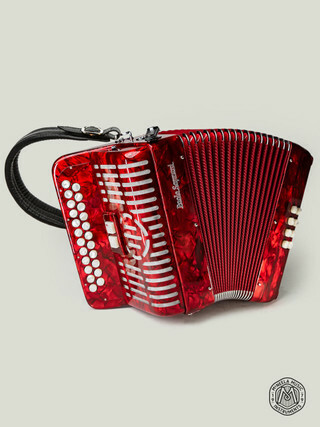
At the professional tier sit the Paolo Soprani Jubilee III and Jubilee IV Italian-made instruments using Voci Armoniche Tipo a Mano reeds, hand-finished for maximum responsiveness, volume, and tonal nuance. The four-voice LMMM Jubilee IV is widely regarded as the benchmark for Irish button accordion quality. Professional instruments start from around $3,400, and the full premium accordion range is available for players at that stage.
Find Your Fit
| Your situation | Recommended system | Recommended voice |
| New player, want the Irish trad standard configuration | 2-voice | |
| New player drawn to a brighter, more cutting tone | C#/D, 21 button | 2-voice |
| 1–2 years in, repertoire growing, want extended range | 2-voice | |
| Developing player wanting greater warmth and harmonic depth | 3-voice (LMM or MMM) | |
| Professional performer, want concert-grade volume and projection | B/C, 23 button | 4-voice (LMMM) |
Browse the full accordion collection here.
McNeela and Paolo Soprani: the range at a glance
McNeela’s own-brand button accordions are designed and curated in Dublin, built with Czech reeds and finished to a standard that reflects over forty years of instrument-making expertise. The range runs from two-voice beginner instruments through to three-voice MMM models for advancing players, every one chosen with the specific demands of Irish traditional music in mind.
Alongside sits Paolo Soprani, a name that needs little introduction among serious Irish accordion players. With over a century of Italian accordion-making heritage, Paolo Soprani instruments represent the upper limit of what the button accordion can do.
Every button accordion in this collection ships with a protective case or gig bag and access to the Benny McCarthy Irish Accordion Masterclass, a structured video course from one of Ireland’s most celebrated players. All new instruments carry a one-year guarantee against material defects, with servicing available beyond the first year for a nominal fee. A 30-day try-at-home policy means you can return any instrument if it’s not right for you. McNeela ships worldwide: next day within Ireland, three to five days to the UK, and around seven days to the rest of the world. If you’re in Dublin, the Baldoyle Industrial Estate showroom is open to visitors who’d rather play before they decide.
Frequently Asked Questions
“Button box” is the colloquial term for a button accordion, widely used among Irish traditional musicians. It refers to any accordion where the treble side uses buttons rather than piano keys. In Irish trad, it almost always means a two-row diatonic instrument tuned to B/C or C#/D.
The Irish button accordion is diatonic in design; each button sounds a different note on push and pull. But because the two rows are tuned a semitone apart, all twelve chromatic notes are accessible across the layout. The term “chromatic accordion” typically refers to a different instrument used in classical and continental European music.
A button accordion uses rows of buttons on the melody side; a piano accordion has a keyboard. Button accordions are the standard instrument for Irish traditional music. Piano accordions offer broader versatility across genres including classical, jazz, and popular music, and suit players whose interests extend beyond Irish trad.
B/C refers to the tuning of the two treble rows: the outer row is tuned to B, the inner to C. It’s the most widely played system in Irish traditional music and the standard taught in most tuition contexts. The C#/D system is the main alternative, offering a slightly brighter tonal character.
A standard Irish button accordion has either 21 or 23 treble buttons arranged in two rows, plus 8 bass buttons. The 21-button model covers all essential notes for traditional playing. The 23-button adds two extra treble buttons for extended range, suited to players who want room to develop.
Voices refer to the number of reeds that sound when a button is pressed. A two-voice accordion produces a bright, clear tone suited to beginner and intermediate playing. Three-voice instruments add depth and projection. Four-voice instruments, found on professional-tier accordions, offer maximum tonal richness.
The Irish button accordion is primarily built for traditional and folk music. Skilled players can adapt it to other styles, but genres like classical, jazz, or musette are better served by a piano accordion or continental chromatic button accordion, which offer a different key layout and broader harmonic range.
It depends on your level. Beginners do best on a two-voice B/C instrument with Czech reeds and responsive action. Intermediate players benefit from a three-voice MMM accordion for richer tone and greater projection. At the professional level, the Paolo Soprani Jubilee range is widely regarded as the benchmark for Irish button accordion quality.
-
-
-
On Sale!
-
-
Sold Out
-
-
Sold Out
-
On Sale!
-
Sold Out
-
Sold Out
-
Sold Out
-
Sold Out


Loading...