



















_category.original.jpg)



_category.original.jpg)















Diatonic vs Chromatic Accordion: The Differences Explained

Two accordions can look almost alike and still work in completely different ways. The split between diatonic and chromatic comes down to how the instrument handles notes: which ones it can play, and whether a button gives the same note on the push and the pull. That single distinction shapes the weight, the feel and the music each is built for. This guide explains the difference in plain terms, then points you to the right accordion for the music you want to play.
Quick Answer
The difference is about notes. A chromatic accordion plays all twelve notes of the scale and is unisonoric, which means each button or key sounds the same note whether you push or pull the bellows, so it can play in any key. A diatonic accordion is tuned to a particular key and is bisonoric, which means a button gives one note on the push and a different note on the pull, much like a harmonica. That makes it lighter and quicker, but more focused in range. As a rule, chromatic accordions suit jazz, classical and Eastern European music, while diatonic accordions are the heart of folk and Irish traditional playing.
How to choose between a diatonic and chromatic accordion
Before you compare models, work through these four questions in order. They settle the decision more reliably than any spec sheet.
Start with the music
The style you want to play decides most of this. Irish, folk and traditional music point to the diatonic box. Jazz, classical and Eastern European music point to a chromatic accordion.
Weigh size and feel
A diatonic box is lighter and more responsive, with fewer reeds to carry. A chromatic accordion is heavier and fuller, with the reeds to play anything in any key.
Understand the Irish box
The B/C and C#/D semitone box is a special case. It is bisonoric like other diatonic boxes, yet its tuning reaches every note, which is part of why it suits Irish music so well.
Check the live product details
Once you know the type, confirm the current price, tuning, voices and what comes in the box before you commit.
Diatonic vs chromatic accordion: a side-by-side comparison
Here is the whole comparison at a glance, the quickest way to see how the two systems differ before reading further.
| Feature | Diatonic Accordion | Chromatic Accordion |
|---|---|---|
| Note production | Bisonoric: push and pull give different notes | Unisonoric: the same note in both directions |
| Musical scale | Tuned to its keys, such as B/C or C#/D | All twelve notes, plays in any key |
| Treble layout | One to three rows of buttons | Three to five rows of buttons, or a piano keyboard |
| Size and weight | Smaller, lighter, very responsive | Larger and heavier, with a wider range |
| Best suited to | Irish, folk, Cajun, Norteño, Alpine | Jazz, classical, tango, Eastern European folk |
| The Irish box | B/C and C#/D are semitone-tuned for full note range | A continental chromatic box is a different instrument |
Neither system is better than the other. The right one depends on the music you want to play and the weight you want to carry.
What each system actually means
What is a diatonic accordion?
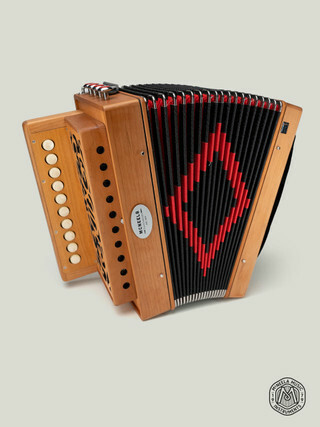
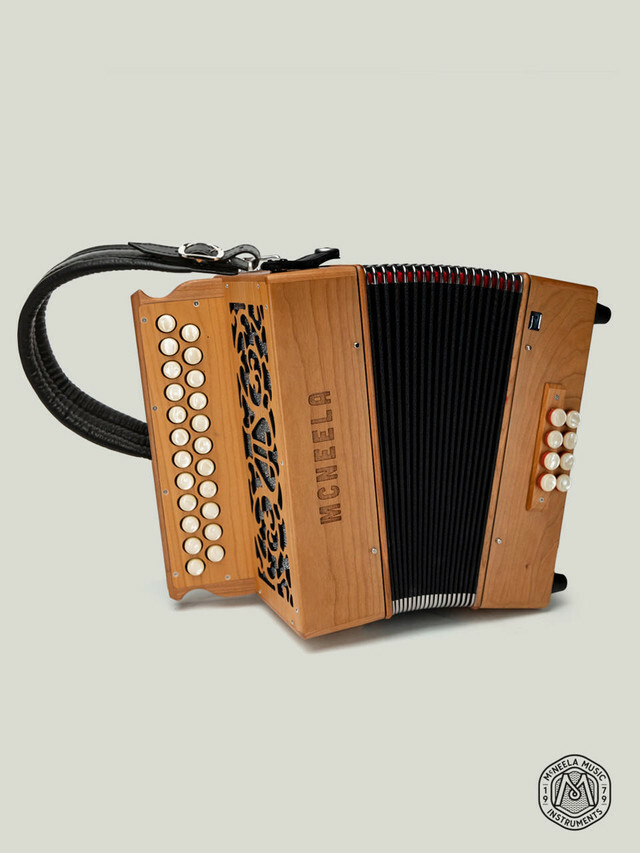
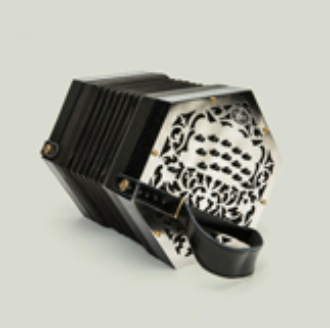
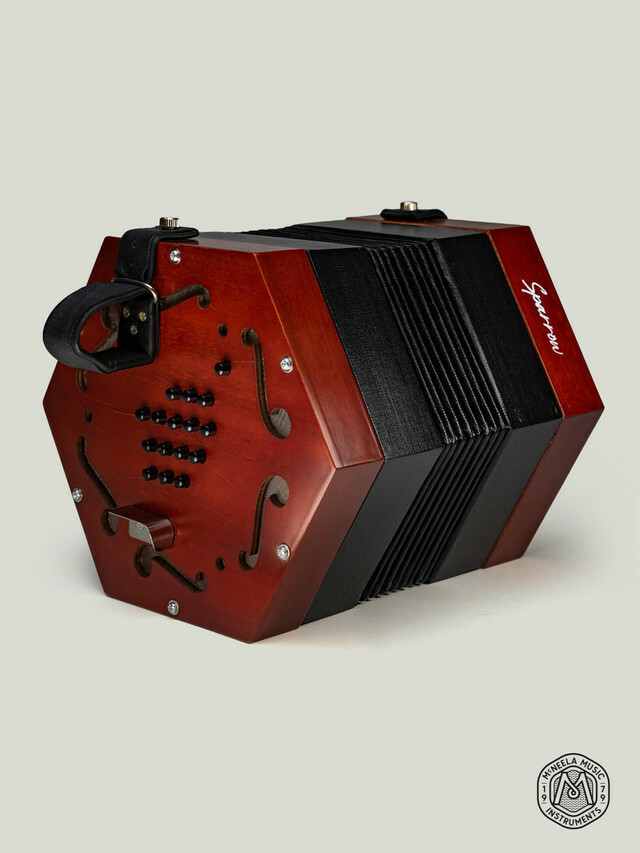
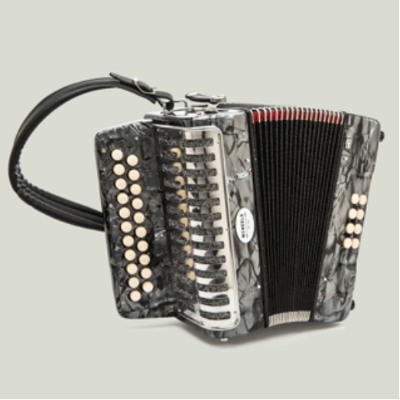
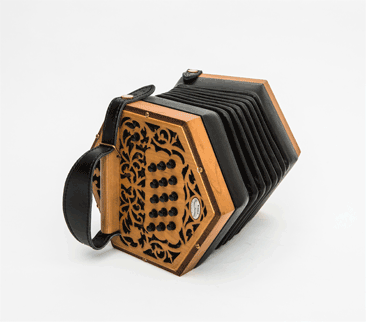
A diatonic accordion is tuned to a set of keys and is bisonoric, so each button sounds two notes, one on the push and one on the pull. It is light, responsive and the heart of folk and Irish traditional music. The B/C and C#/D Irish boxes belong to this family.
- You play Irish or folk music.
- You want a light and responsive box.
- You like the push-and-pull feel.
- The keys are tied to the tuning you choose.
- The push-and-pull action takes a little getting used to at the start.
What is a chromatic accordion?
A chromatic accordion plays all twelve notes and is unisonoric, so each button or key gives the same note whether you push or pull. That makes it versatile across any key and genre, from jazz to classical. It comes as a button instrument or with a piano keyboard, and is larger and heavier.
- You play jazz, classical or Eastern European music.
- You need every key.
- You want maximum versatility.
- It is larger and heavier than a diatonic box.
- The button layout takes time to learn from scratch.
Which accordion should you choose?
Still weighing it up? These four starting points cover where most players land.
The diatonic button box is the idiomatic instrument. Start in B/C for the widest tuition and session support.
A chromatic accordion gives you the full range, the natural choice for jazz, classical and Eastern European music.
The diatonic box is markedly lighter and quicker to hold through a long session.
An improving player moves from a two-voice box to a richer three or four-voice instrument in the same tuning.
Recommended accordions
These are considered picks across the range, from a first box to a professional instrument. Each one comes with access to McNeela's Irish Accordion Masterclass with Benny McCarthy.
You can also browse the full button accordions range, or shop by level across beginner, intermediate and advanced accordions. You can also browse the full accordion range of McNeela in one place.
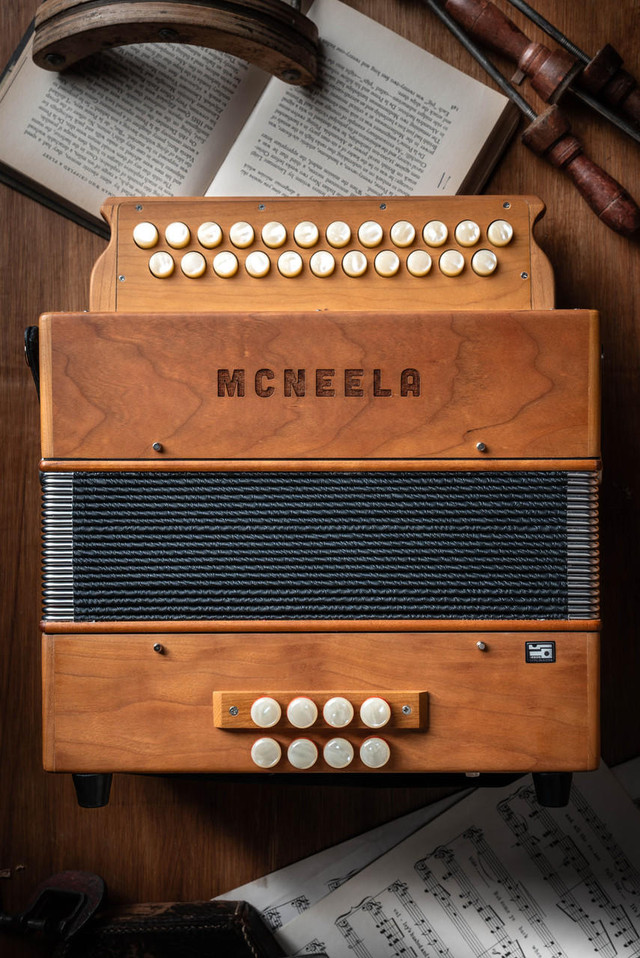
The McNeela Original (B/C, 2-Voice)
The natural first box for Irish music. A two-voice B/C accordion in 21 or 23 buttons, with top-quality Czech reeds and the tuning most teachers and sessions use.
- TuningB/C
- Voice2-voice
- ReedsCzech | $1,267

The McNeela Original (C#/D)
The same build quality in the brighter, punchier C#/D tuning. A 23-button box with top-quality Czech reeds and a thumb-groove fingerboard for comfortable playing.
- TuningC#/D
- Buttons23
- FingerboardThumb-groove | $1,013
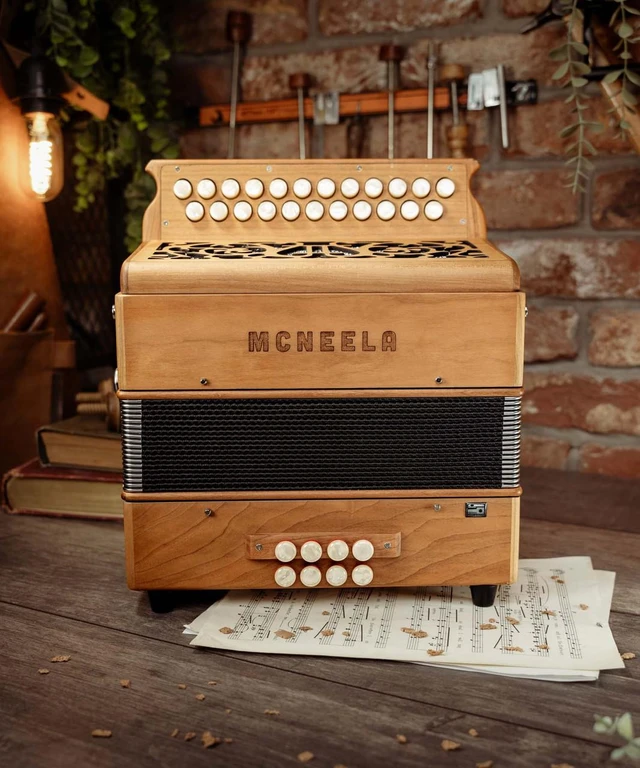
McNeela Premium (B/C) 3-Voice (LMM)
A fuller, richer three-voice tone with fast, effortless action. The natural step up for an improving B/C player who has outgrown a starter box.
- TuningB/C
- Voice3-voice LMM
- Buttons23 | $1,661

McNeela Premium (C#/D) 3-Voice (MMM)
Three voices in the brighter C#/D tuning, with more body and punch at speed. The intermediate choice for a C#/D player ready for a better instrument.
- TuningC#/D
- Voice3-voice MMM
- Buttons23 | $1,267

Paolo Soprani Jubilee III (3-Voice)
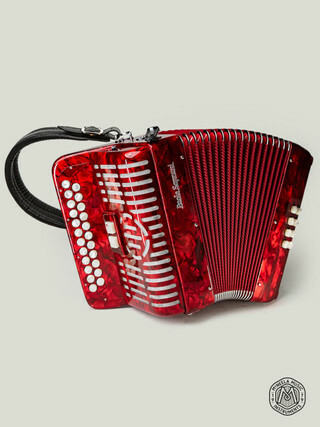
The legendary Italian box in a three-voice B/C build. A professional-grade instrument with the heritage and tone that have defined Irish accordion playing for decades.
- TuningB/C
- Voice3-voice
- Buttons23 | $3,456

Paolo Soprani Jubilee IV (4-Voice)
Widely regarded as the finest Irish button accordion ever made. A four-voice LMMM Paolo Soprani, the aspirational benchmark for serious and professional players.
- Voice4-voice LMMM
- Buttons23
- TypeDiatonic | $4,018
The best accordion by player type
One more way to place yourself. Find the row that fits, and the choice usually follows.
| Player Type | Better Choice | Why |
|---|---|---|
| Irish or folk player | Diatonic | The button box is idiomatic, light and responsive |
| Jazz, classical or Eastern European | Chromatic | Every note in every key, the range these styles need |
| Wants the lightest instrument | Diatonic | Fewer reeds and a smaller body make it easier to carry |
| Wants one box for any genre | Chromatic | The full chromatic scale covers every key and style |
| Irish player wanting more tonal depth | Premium or Paolo Soprani | Three and four-voice boxes add richness in the same system |
Common mistakes when choosing between a diatonic and chromatic accordion
- Assuming a diatonic box can only play in one key. The semitone B/C and C#/D boxes reach every note.
- Treating chromatic as automatically better. For folk and Irish music, the diatonic box is the more natural fit.
- Buying a heavy chromatic accordion for simple folk tunes a light diatonic box plays beautifully.
- Choosing a chromatic accordion for Irish trad, where the button box is the idiomatic instrument.
- Ordering before checking the price, tuning, voices and weight that suit you.
Why buy your accordion from McNeela?
McNeela has been working with accordion players from Dublin since 1979, and that experience sits behind every instrument and every recommendation on this page.
Specialist expertise
Over forty years making and selling button accordions built for Irish traditional music, run as a family business that plays what it sells.
A curated, honest range
Instruments matched to your level and your music, from a first box to a professional Paolo Soprani, with guidance to find the right tier.
Real player guidance
Every accordion comes with the Irish Accordion Masterclass presented by Benny McCarthy of Danú, a structured course that grows with you.
Aftercare and confidence
A 30-day try-at-home policy, a one-year guarantee, worldwide shipping and a Dublin showroom where you can play before you decide.
Diatonic vs chromatic accordion: your questions answered
Is the Irish B/C box diatonic or chromatic?
It belongs to the diatonic family, because it is bisonoric, with each button giving one note on the push and another on the pull. But the two-row semitone tuning lets it reach every note, so in practice it has the chromatic range Irish music asks for, in a light and responsive box.
What is the difference between bisonoric and unisonoric?
A bisonoric accordion sounds two different notes on each button depending on the bellows direction, like a harmonica, which is typical of diatonic boxes. A unisonoric accordion sounds the same note in both directions, which is how chromatic and piano accordions work.
Are all piano accordions chromatic?
Yes. A piano accordion uses the same chromatic note layout as a chromatic button accordion, simply with piano keys instead of buttons. Both play all twelve notes and sound the same note whether you push or pull the bellows.
Which accordion is easier for a complete beginner?
It depends on the music. For broad, general playing a chromatic accordion is often the gentler start, since one logical layout covers every key. For Irish traditional music, the B/C button box is the standard, and most tuition is built around it.
Can a diatonic accordion play in more than one key?
Yes. Most diatonic boxes have more than one home key, and the semitone B/C and C#/D boxes used in Irish music can reach every note. The idea that a diatonic accordion is locked to a single key is a common misconception.
Why is a chromatic accordion heavier than a diatonic one?
A chromatic accordion carries the reeds to play every note in every key, which means many more reeds inside a larger body. A diatonic box needs far fewer reeds for its range, so it stays smaller, lighter and quicker to handle.
What are B-system and C-system chromatic accordions?
These are the two main button layouts on a chromatic button accordion. They arrange the notes in a slightly different order, with the C-system more common in Western Europe and the B-system favoured in Eastern Europe and Russia. Players usually learn one and stay with it.
Is a melodeon diatonic or chromatic?
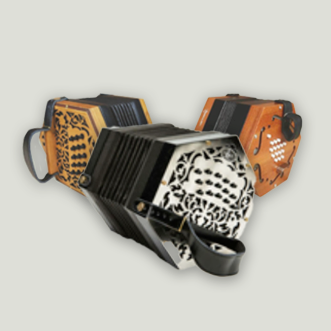
A melodeon is diatonic. It is usually a single-row bisonoric box tuned to one or two keys, lighter and simpler than a two-row Irish accordion, and a common stepping stone into the button box world.
Do I need to read music to play a diatonic accordion?
Not for Irish traditional music, which is largely learned by ear, tune by tune. The Benny McCarthy Masterclass teaches in that tradition through demonstration rather than notation, so you can start without any background in reading music.
Still choosing between a diatonic and chromatic accordion?
For Irish and folk music, the diatonic box is almost always the answer, and the B/C box gives you the range the music needs in a light, responsive instrument. Browse the recommended models above to find the one that fits where you are now.